Safari-TV Beginner Guide: How a Run Works, Controls, Bus & First Purchases
Learn how a Safari-TV run plays out from camp to camp, covering driving controls, bus repairs, tourist drinks, early shop buys, filming tasks, and daily follower quotas.
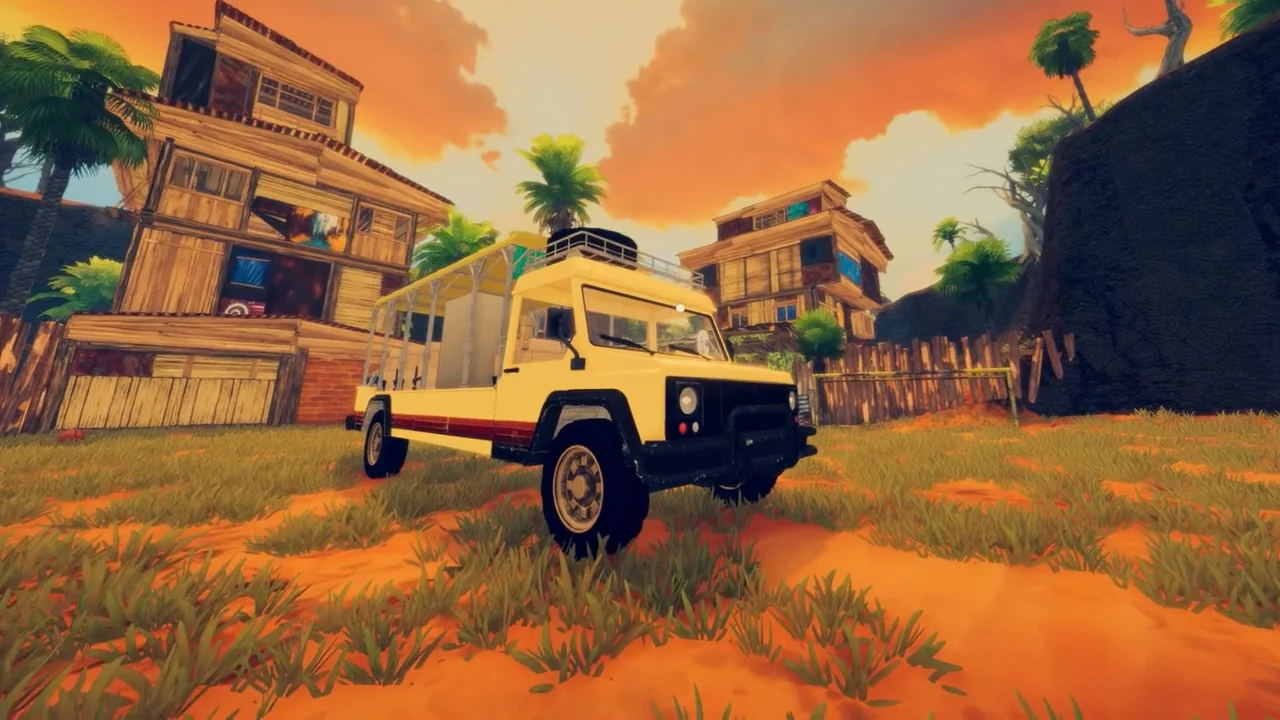
In Safari TV, 2 to 4 players run a chaotic co-op safari agency in a destructible truck while keeping tourists safe, surviving wildlife encounters, and filming clips to grow an in-game channel. Every campaign stretches across 9 days with rising follower quotas, a shared team cash pool, and a surprise waiting on level 10 if your crew reaches the finale.
Contents
- Day loop: camp to camp
- Controls and bus driving
- Bus repairs and tourist care
- Shop picks and cash rules
- Biomes, events, and filming
- Saves, graphics, and Steam Deck
- Payouts and quotas summary
How a Safari-TV day loop works
Each day follows a six-phase cycle shown in the session browser: preparing camp, prepping in camp, boarding tourists, driving on safari, watching clips at the next camp, and sleeping until morning. Before leaving camp, gear up at the shop, load supplies onto the bus shelves, and check your individual filming tasks and today’s follower quota on the HUD.
- Pull up to the first bus stop and honk so up to 6 tourists can board the truck independently.
- Drive through the first road event located before the main stop and film hazards along the route.
- Stop at the main filming area and honk to let passengers out, then record clips on your phone while they approach and photograph animals before waiting for them to reboard.
- Clear the second road event after the stop and drive into the next camp to unload your passengers, or turn on the camp TV straight away if every tourist was knocked out.
- Gather at the camp TV so up to 4 players can sync and watch the day’s clips together, then review your follower reactions and day summary payouts.
- Sleep on a free mattress to start the next morning, which unloads the previous area and closes the passage back.
If your driver blows past a tourist stop, an on-screen prompt tells the crew to turn back, park, and honk. When video transfers stall at the camp TV for 30 seconds, the viewing leader can choose to continue with whatever clips every player has finished downloading. A built-in 30-second boarding fallback also seats any passenger who gets stuck while walking back to the truck, and camp balls placed on a bus shelf carry over when the old camp unloads.
Controls and driving basics
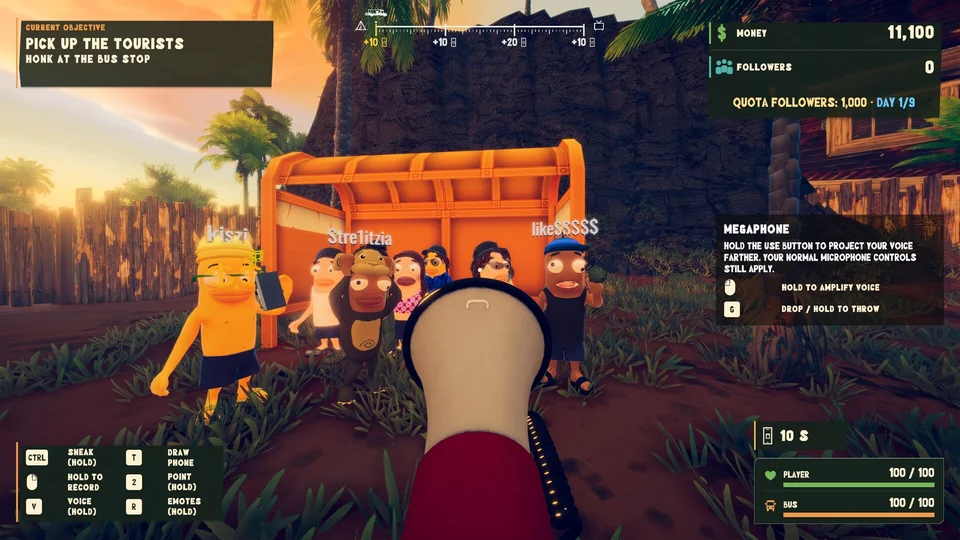
On foot, movement, sprinting, sneaking, and jumping let you dodge animals and climb onto the roof, while your main action buttons handle interacting with objects, grabbing loose gear, and dropping or holding to charge a throw. You can draw or holster your phone at any time, hold the quick-record input to film and release to stop and holster, switch between front and rear lenses, and trigger emotes or directional pointing. Keep holding the record button if an animal knocks you down, because an active phone recording stays running through a fall or ragdoll. Voice chat uses push to talk (configurable under audio settings), and all keyboard and mouse bindings except Esc, Backspace, Tab, F11, and Win can be remapped in the controls menu while controller layouts remap through Steam Input.
Once seated in the driver’s seat, you steer, accelerate, brake, toggle the handbrake, drag the gearshift to change gears, sound the horn, switch the wipers on or off, and exit the seat on demand. Shifting into D or L while rolling backward works smoothly because pressing accelerate first brakes the rollback before moving forward. Inside the cab glovebox, interactive controls cover a guarded red self-destruct button alongside bus jumps and nitro. If the truck flips or wedges against terrain, pause the game and use bus unstuck to upright and lift it onto the camp spawn or nearest road (shared five-minute cooldown, with a reminder after one minute overturned), or use the player unstuck prompt that triggers after 15 seconds trapped in place.
For gearshift tips, glovebox gadgets, and step-by-step roadside fixes, read our bus repair and driving controls guide.
Keeping the bus and tourists moving
The safari truck loses durability and sheds physical body panels and wheels when hit by boulders, wildlife, or poor driving. Pick up any knocked-off 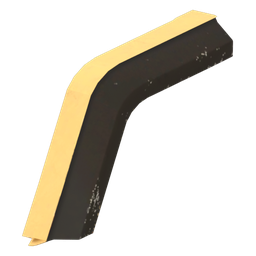 Bus Part and aim at the chassis with interact to reinstall it and recover durability, or carry a
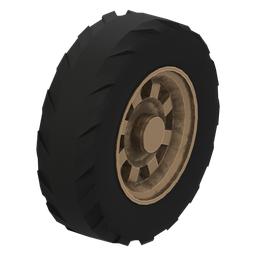 Bus Wheel — including the spare stored on the bus roof — to a matching empty wheel mount. When chassis damage piles up, a single-use
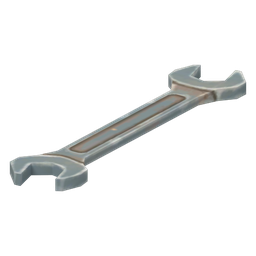 Repair Tool mends as much as 50% of the truck’s total durability before disappearing. Watch out near the entryways too, since swinging bus doors can knock down nearby players without inflicting health damage.
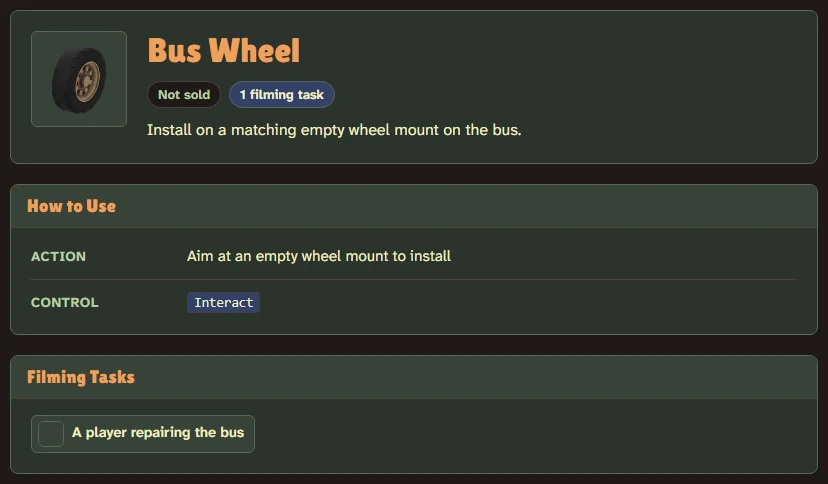
Your passengers are both your income source and a moving responsibility: every saved tourist adds $100 to the team balance, while lost tourists cost $0 during all 9 protected sponsor days ($100 is deducted per lost tourist only after Day 9). Along the route, tourists ask for water or  Beer one active request at a time, giving you 60 seconds to hand over the matching drink from the onboard
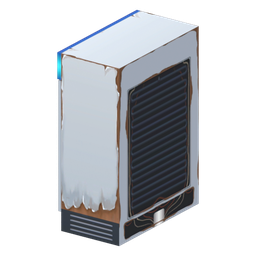 Drink Fridge using the interact key. A full fridge holds nine water bottles and nine beers, and every passenger can request up to three drinks per day, setting their drink service bonus to $0, $33, $67, or $100 for 0, 1, 2, or 3 timely deliveries.
New campaigns begin with five medkits already sitting on the middle bus shelf so you can patch up early injuries right away. Use a  Small Medkit for up to 35 health or a
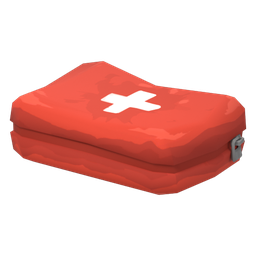 Medium Medkit for up to 85 health on injured passengers or yourself (hold the use key for 1 second to self-heal); both stay unconsumed at full health and cannot revive unconscious tourists. To pick up a knocked-out teammate or deliver a full 100-health heal to an injured tourist, aim and trigger a single-use
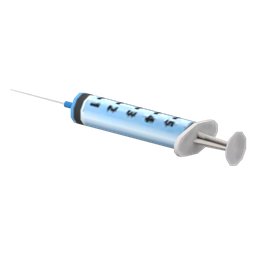 Syringe.
See the full medical breakdown and drink-service timing rules in our tourist care and drinks guide.
First shop purchases and money rules
All cash is earned in dollars and pooled across the entire crew in one shared team balance. At each camp day summary, your crew earns $100 per saved tourist plus $0, $33, $67, or $100 per tourist in drink bonuses, pays $0 for lost tourists across the 9 sponsor days ($100 per lost tourist only afterward), and splits a $750 filming-goal pool (3 × $250) pro rata by completed-over-assigned tasks with banker’s rounding. During those 9 protected days, sponsor support tops up your filming-goal cash minus bus repairs to $1,000 as long as your team finished at least 1 task, filmed at least 3 distinct moments, or reached the day’s sponsor follower threshold—with saved-tourist and drink payouts stacking on top. Any damage left on the truck when you settle up is billed through automatic repairs at $2 per missing health point (out of 100 max HP), $10 per missing body part, and $25 per missing wheel; because sponsor support offsets camp repairs on eligible Days 1–9, automatic repair bills reduce net earnings only on sponsor-ineligible days or after Day 9.
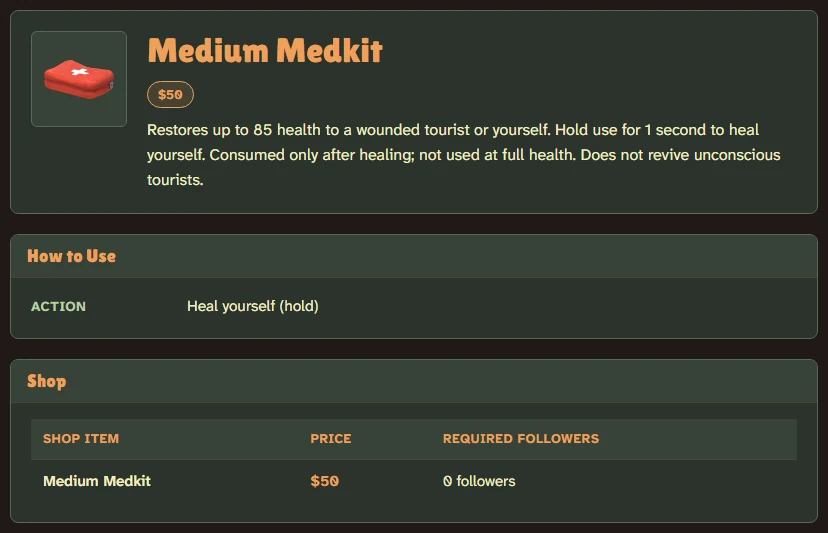
Out of 27 held items in the game, 19 entries are sold in the camp shop and all 19 require 0 followers to unlock. Plan your cabin storage carefully because each bus shelf fits five small items (syringes, magazines, medkits, carrots, and wrenches), whereas RPG grenades and larger gear take up an entire shelf on their own. Priced from $20 to $500 against the $1,000 protected-day sponsor top-up floor, the camp shop’s lower-priced medical, utility, and repair options include:
- Small Medkit ($20) and Medium Medkit ($50): cheapest healing picks for a wounded tourist or yourself, with both stacking up to five per shelf.
 Carrot ($50): cheap single-slot purchase that lets you hand-feed a hippo to tame and ride it for hippo filming goals.
- Syringe ($80): affordable revive tool that restores 100 health to a downed player or injured tourist.
- Drink Fridge restock ($200): sold under the shop label Restock Beer & Water to refill your beverage supply when tourist requests run it dry.
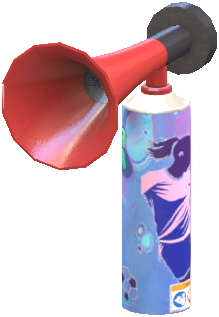 Air Horn ($350): drives away wildlife within 30 m (excluding filming-event animals) while spending 5% gas per blast.
 Megaphone ($400): amplifies and projects your voice farther while you hold the use button, with normal microphone controls remaining active.
- Repair Tool ($500): listed as Repair Wrench in the shop and restores up to 50% max durability when field repairs are needed.
Once your balance grows, an 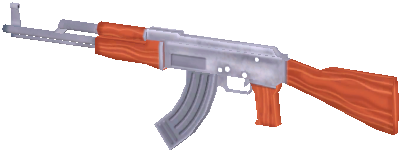 AK-47 ($1,600) lowers animal courage and helps complete two linked rifle filming tasks (be careful, because stray bullets can wound both teammates and tourists), while the non-shop
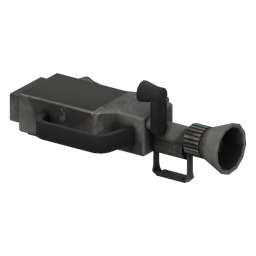 Video Camera is only a carried prop since footage is recorded on your phone. Compare purchase priorities in our shop buying guide or browse every price and action in the items database.
Biomes, events, and filming basics
A campaign rotates through 4 biomes — Savanna, Jungle, Oasis, and Mesa — placing all 4 environments into your first four areas in a seeded order. Across those routes, the game draws from 21 events split into 9 main stop events and 12 road events. Main stop events include 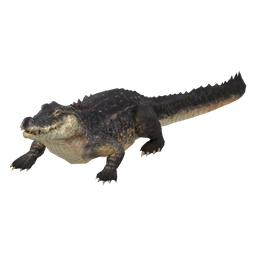 Crocodiles,
 Macaques, and
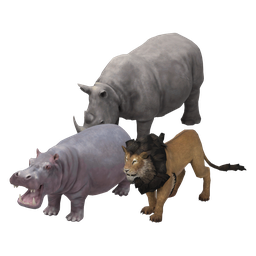 Rhinos, lions and hippos, while road slots trigger hazards before or after the stop such as Desert storm. Wait to wake stop-roof Macaques until you are ready, because they stay asleep until you honk and tourists step out, can snatch nearby rifles or horns, and take three punches total from any teammates to chase off.

The filming pool spans 44 objectives, backed by four always-available fallback tasks (recording a single tourist, two tourists together, the bus itself, or a bus selfie) so crews can always finish clips. Each player receives 1 task on the opening day of each three-day cycle (Days 1, 4, and 7) and 2 tasks on the remaining days (Days 2, 3, 5, 6, 8, and 9), with Day 1 restricted to five simple tasks (filming the bus, a basketball hoop shot, a football goal, a jumping player, or a dancing player). Every completed task pays 1,250 followers multiplied by the three-day cycle (1,250 on Days 1–3, 12,500 on Days 4–6, and 125,000 on Days 7–9), feeds the $750 pro-rata goal pool, and grants 25 Safari Coins from follower donations, while filming the same event on multiple cameras still counts once. On top of tasks, 10 funny-moment bonus tags act as reward multipliers on the cycle-scaled moment base (175 on Days 1–3, 1,750 on Days 4–6, and 17,500 on Days 7–9), topped by bus destruction, explosions, and loud screams at ×1.5 (+50%) each alongside repeat decay on voice, megaphone, jump, and dance clips and team-size scaling. Settlement never deducts followers—audience notices like boring or repetitive footage are feedback labels only, and only returning with nothing recorded zeroes the day’s follower payout.
Daily follower quotas check your cumulative total once per day—starting at 1,000 on Day 1, hitting 10,000 on Day 3, and climbing to 1,000,000 on Day 9 with no quota after the ninth day—and missing a quota triggers the bankruptcy finale immediately, whereas a negative cash balance grants one day of grace to recover. The camp wardrobe spans 66 hats, 40 glasses, 2 costumes, 10 emotes, and 49 character options, where hats and glasses unlock at follower milestones and are bought alongside the 0-follower costumes with Safari Coins (while emotes and character options require neither followers nor coins). Dive deeper into scoring with our filming and followers guide or check the full filming tasks and daily follower quotas tables. You can also look up every encounter on the events and biomes page and preview wardrobe unlocks in the cosmetics catalog.
Campaign saves, performance, and Steam Deck notes
Only the session creator has access to local campaign saves, which include a separate autosave slot and a manual save slot. Automatic saves fire at the opening morning and following each regular night’s sleep, and hosts can save manually anytime through the pause menu. Loading a save resumes from the start of that day with your cash, followers, event sequence, and bus-shelf item placements intact, although shelf items reset to default state (clearing ammo counts and custom text). Saving pauses once the finale begins, while existing save files stay available after an ending.
Before searching for co-op lobbies, make sure everyone picks the same server region and updates to the same build, because friends in different regions cannot see each other’s sessions. Friends can join mid-run during most phases and spawn near the bus once the host’s world finishes loading, though joining closes temporarily during camp TV viewing.
Five quality tiers (Very Low up through Ultra) control core visual fidelity alongside a separate bloom switch, separate VSync and frame-rate limit controls (including a 100 FPS option and Unlimited), and DirectX 11 rendering on Windows. If camera motion bothers you while walking or running, switch off the persistent Head Bobbing toggle in settings to remove vertical bob and sideways head sway. On Steam Deck, full controller prompts, stick deadzone controls, and a dedicated TV playback backend are included, with developer hardware tests reaching 50 to 55 FPS after optimization patches while external video saving stays limited to Windows. For preset tradeoffs and filming frame-rate advice, check our Steam Deck and FPS settings guide.
Day-loop payouts and progression summary
Use the benchmark table below to track daily cash payouts, repair costs, and key follower quota targets across a 9-day run.
| Category | Amount or target | How it works |
|---|---|---|
| Saved tourist payout | +$100 per tourist | Added to the shared team balance for each passenger brought safely to camp |
| Lost tourist penalty | $0 on Days 1–9 (-$100 after) | No deduction during all 9 protected sponsor days; $100 per lost tourist only afterward |
| Drink service bonus | $0, $33, $67, or $100 per tourist | Paid for 0, 1, 2, or 3 water or beer requests served within 60 seconds |
| Filming goals | $750 pool, 1,250 × cycle followers, +25 Safari Coins | Cash pool (3 × $250) pays pro rata by completed/assigned goals; task followers scale ×10 every 3 days |
| Sponsor support | Tops up to $1,000 on Days 1–9 | Covers goal income minus repairs when eligible (1 task, 3 distinct moments, or sponsor threshold), with tourist payouts on top |
| Automatic bus repairs | $2/HP, $10/part, $25/wheel | Charged at day summary for unrepaired health (100 max HP) or missing pieces |
| Funny-moment multipliers | ×1.2 to ×1.5 (175 × cycle base) | 10 bonus tags multiply the cycle moment reward, scaled by repeat decay and team size |
| Day 1 quota | 1,000 cumulative followers | Starting channel target (1 simple task per player) |
| Day 2 quota | 5,000 cumulative followers | Second-day channel target (2 tasks per player) |
| Day 3 quota | 10,000 cumulative followers | Matches the first-cycle quota milestone (2 tasks per player) |
| Day 4 to Day 8 quotas | 25,000 to 500,000 cumulative followers | Steps through 25,000, 50,000, 100,000, 250,000, and 500,000 across days 4 to 8 |
| Day 9 quota | 1,000,000 cumulative followers | Final daily quota before the endgame finale (no quota after Day 9) |